
What Is Plytix PIM?
TL;DR
- A Product Information Management (PIM) system keeps your product data, titles, specs, variants, and assets accurate and consistent everywhere you sell.
- You probably need one when product information is scattered across spreadsheets, systems, or teams and becomes hard to manage.
- Most PIM softwares focus on centralizing data, managing variants, enforcing governance, and supporting multi-channel publishing.
- Plytix PIM delivers enterprise-grade PIM capabilities with unmatched simplicity, speed, and cost-efficiency, plus the workflows, AI, and connected systems teams need to turn product content into a growth asset.
PIM Comparison: Jobs to be Done
| Jobs to be Done | Other PIMs | Plytix PIM |
|---|---|---|
| Setup and modeling | Often technical to configure. | Designed for business users, not just specialists. |
| Governance | Strong controls, often admin-led. | Built for shared, everyday workflows across teams. |
| User adoption | Typically limited to specialists. | Unlimited users, so product work isn’t gated. |
| Time to value | Months to fully roll out. | Standardize the core, go live, then improve. |
| Content creation | Handled in external docs and tools. | AI Studio enriches content directly on the product record. |
| Asset alignment | DAM is usually separate or loosely connected. | Digital assets live alongside product data in one platform. |
| Quality Control | Gaps often surface during export. | Visible completeness tracking with rules and progress indicators. |
| Total cost | Higher due to services, complexity, and bottlenecks. | Lower due to a simpler system and a free plan to start. |
| Support | Can be tiered and less hands-on. | Practical help from PIM experts during rollout. |
What is a PIM and why you may need one
A PIM is where teams centralize, organize, and maintain all their product data so it stays consistent across every channel you sell on and across every team that touches it. For many brands, that makes it the operational core of an ecommerce PIM strategy.
In practice, this usually means managing things like:
- Titles, descriptions, and marketing copy
- Technical specs and compliance information
- Pricing and variations
- Channel-specific attributes
The need usually shows up when multichannel product data management starts becoming too messy to handle with spreadsheets, disconnected tools, or manual updates.
You probably need a PIM if:
- You sell across multiple channels and keeping them in sync is becoming a part-time job.
- Your variants share attributes that keep drifting out of alignment.
- Multiple teams touch product content and no one fully trusts the current version.
- You keep finding gaps in your data right before a launch.
What most PIMs offer
The PIM market has matured to the point where standard features are expected by any buyer. While individual platforms vary, the goal for most is to provide a single infrastructure that handles the heavy lifting of data organization so you can stop living in spreadsheets.
Most platforms cover the same functional ground:
- Central source of truth: A single home for product info so there is only one "right" version of your data.
- Flexible data modeling: A way to group products, create custom attributes, and link related items like accessories or upsells.
- Governance & permissions: Rules for who can do what, ensuring only the right people can edit sensitive data or approve changes.
- Data quality & completeness: Built-in quality checks and safeguards that flag missing photos or incomplete descriptions before they go live.
- Syndication & localization: Ready for every channel with features that help you translate content for global markets or format data specifically for Amazon, Walmart, or your own site.
While many platforms add on complex, modular layers to cover every possible enterprise edge case, these additions often come at the expense of day-to-day speed.
At Plytix, we believe a PIM is only as powerful as the team's ability to actually use it, which is why we’ve focused on delivering these standard capabilities through a radically different user experience.
What Plytix PIM does differently
While most PIMs are built for IT architects to manage data, Plytix PIM is built for the business teams who have to use that data to sell products.
We deliver enterprise-grade PIM capabilities with unmatched simplicity, speed, and cost-efficiency, ensuring the system stays current because the people doing the work every day actually enjoy using it.
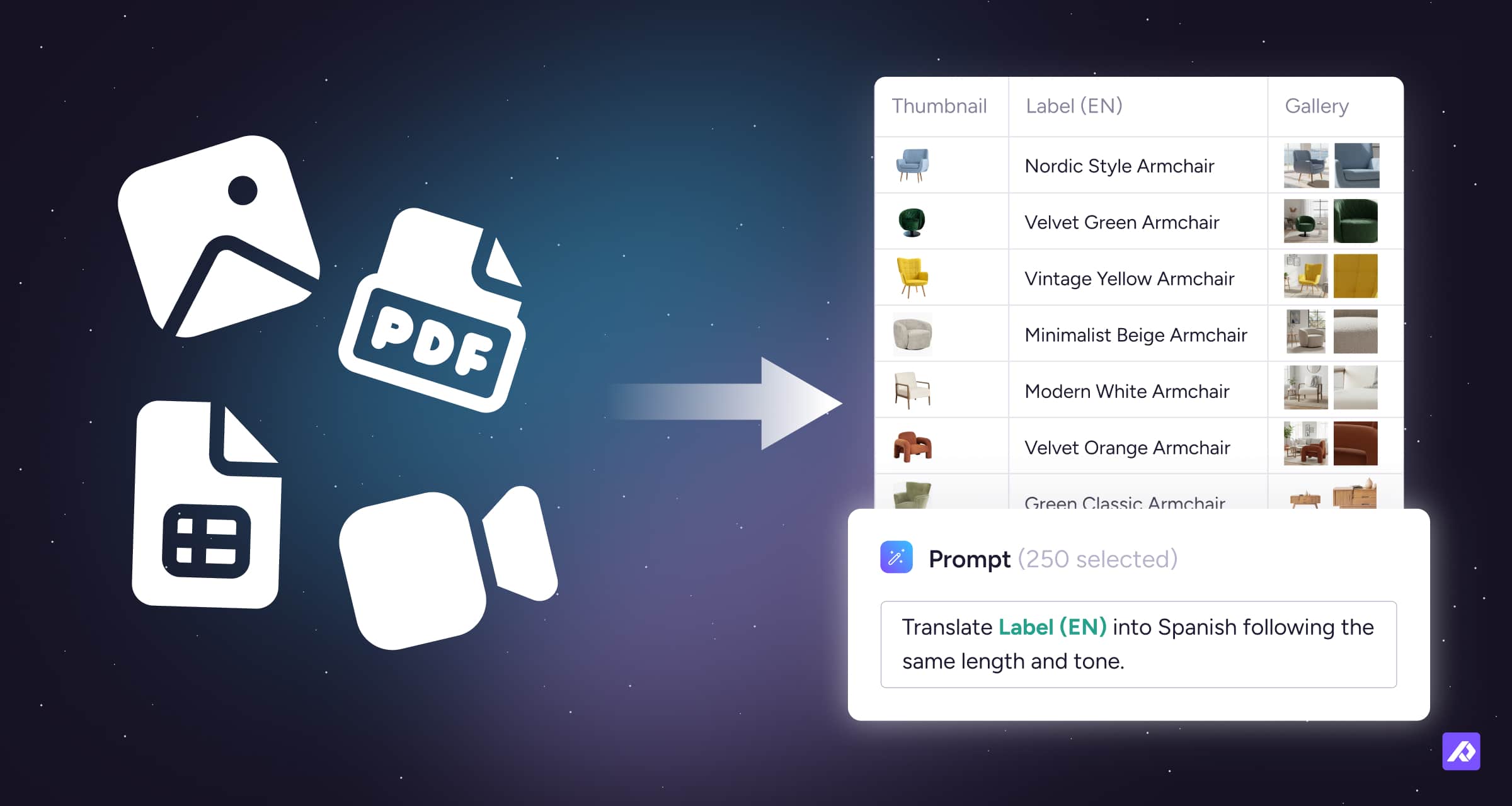
Two practical differences that matter for most teams:
- Designed for collaboration: Plytix PIM is designed for teams, not just IT or operations. Marketers, ecommerce managers, and merchandisers can all work from the same trusted source of truth without relying on complex ERPs or manual spreadsheets.
- Foundational connectivity: Because the PIM is the foundation for everything else in Plytix, any improvements you make to product data flow directly into your assets, content workflows, and sales channels.
In practice, the Plytix difference is felt across a wide range of areas that influence daily productivity, including unmatched ease of use, unlimited user model, native AI capabilities, and integrated DAM.
Is Plytix the right fit for you?
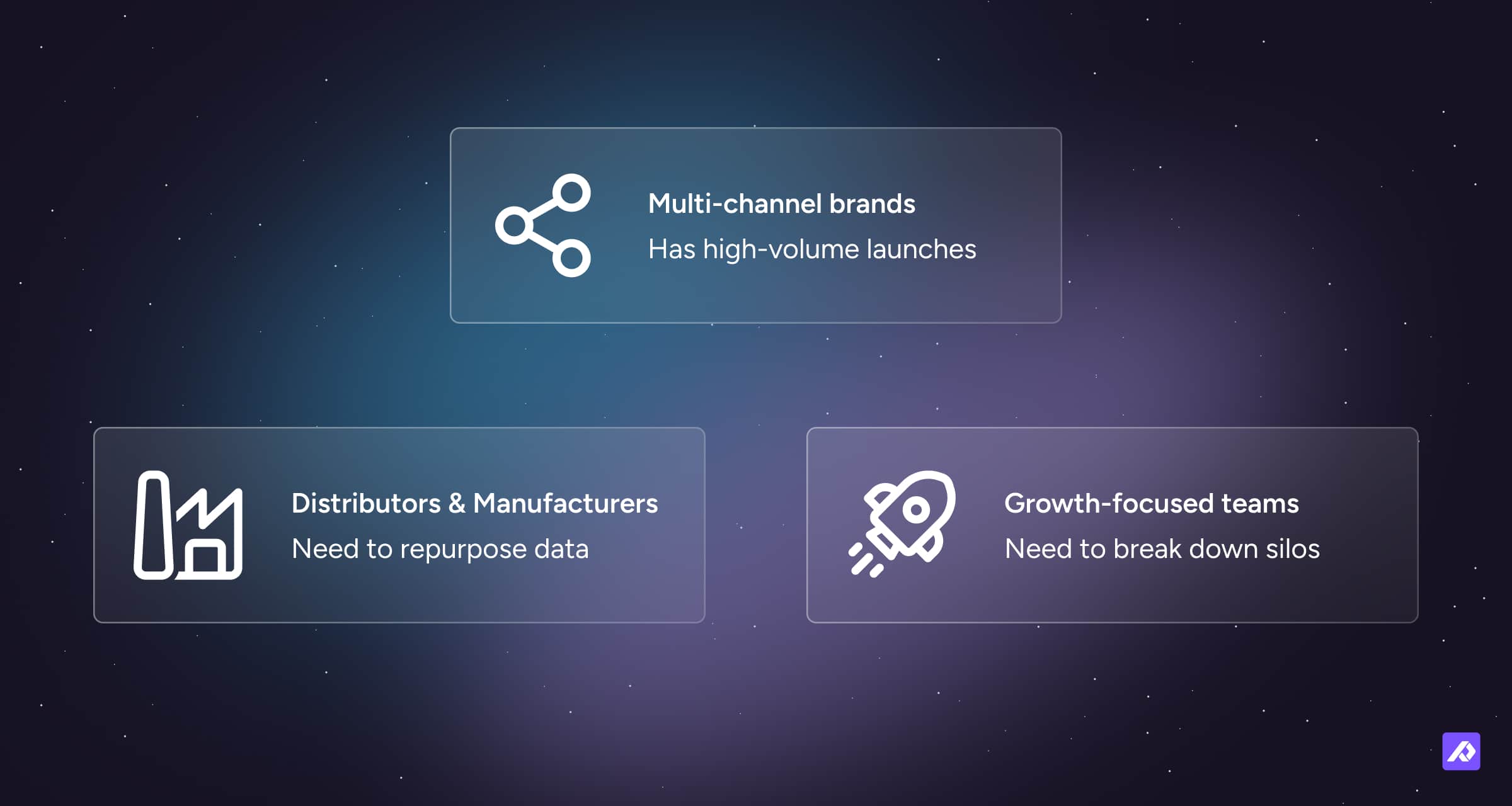
Plytix is a versatile solution designed to drive growth for a wide range of companies, from startups to global enterprises. While our platform is flexible enough to handle almost any product data challenge, it is an especially powerful fit for:
- Multi-channel brands: Specifically, those managing high-volume launches or complex product variants across various platforms.
- Distributors & manufacturers: Teams that need to efficiently reuse and repurpose data for Shopify, third-party marketplaces, and B2B retail partners.
- Growth-focused teams: Companies looking to break down silos between marketing, operations, and sales by giving everyone access to a single source of truth.
Frequently Asked Questions
Yes, you usually still need a PIM if you already have an ERP, because ERP manages operations while PIM manages product content. Most teams eventually need both.
No, Plytix is not only for small catalogs. It scales across SKUs, users, and channels while staying usable as your catalog grows.
Most teams start seeing value once they have standardized a core attribute set and launched one or two channels. From there, they can expand with a stronger foundation in place.
Yes, you can migrate to Plytix from another PIM. Depending on your catalog size and complexity, some teams can be up and running in as little as two days.
Yes, you can try Plytix for free. The Standard plan is free, with no trial period and no expiration.
If your needs are more complex, Plytix can still be a strong fit, but teams that want a highly custom, IT-managed build from day one may prefer a heavier suite. Plytix is strongest when you want a scalable system your team can actually own.