
What is Plytix?
By the Plytix Team · Updated May 13, 2026
TL;DR
- What it is: Plytix is an all-in-one multi-product commerce platform designed for Content Led Growth that combines traditionally separate technologies into a single environment. Think of Plytix as a tightly integrated suite so teams can improve product data quickly and reuse it across sales channels. It unites every part of your product content ecosystem (from data and assets to feeds, portals, and PDFs) into one connected workflow.
- What's included: PIM, DAM, Feed Management, and AI Content Studio, plus a Shopify Content Manager for Shopify brands, and add-ons like Brand Portals and Product Data Sheets
- What it does: Plytix helps you structure, enrich, approve, and publish product listings from one shared product record without having to "duct tape" different tools together. By connecting everything inside one ecosystem, Plytix transforms your product content into your strongest growth asset.
- Where it fits: Between your upstream data sources (ERP, suppliers, spreadsheets) and your downstream channels (Shopify, marketplaces, retailers, sales materials)
- Why choose Plytix: One update, everywhere. Fewer errors, faster launches, better listings. A single source of truth that grows with you
- Pricing: Start on the Free plan, then scale as you grow using monthly credits for AI and feed processing, with optional add-ons like Brand Portals and Product PDFs
What is Plytix?
Functionally, Plytix combines a product information management (PIM) system, a digital asset management (DAM) system, an AI content generator, and a feed management layer for distributing product content to ecommerce channels and B2B retailers.
For Shopify brands, Plytix also includes Shopify Content Manager, a Shopify-specific workspace that keeps Shopify product fields and metafields synced with your central product record.
And when teams need partner sharing or sell sheets, they can add Brand Portals and Product PDFs.
Most product content problems follow the same pattern.
- Specs are in a spreadsheet.
- Photos are in Dropbox or Drive.
- Channel requirements are in someone’s head.
- Everyone is copying and pasting the “latest” version.
That pattern is expensive. Wrong sizes on a marketplace. Old images on the website. Inconsistent titles in ads. Hours spent fixing the same mistakes again and again.
Plytix is built to stop that pattern. Because the PIM is the foundation for everything else in Plytix, any improvements you make to product data flow directly into your assets, content workflows, and sales channels.
The platform at a glance
Plytix is one platform with modular products that share the same data and assets: PIM for product information, DAM for assets, Feed Management for channel formatting, AI Content Studio for faster copy and translations, and Shopify Content Manager for keeping Shopify in sync.
Most teams start with the core and add what they need.
The core products
- Product information management (PIM): The flagship product where your product details live (attributes, variants, relationships) and is designed for collaboration across teams, not just IT or operations.
- Digital assets management (DAM): A fully integrated asset library where your images, videos, and files live, linked directly to the products they belong to.
- Feed management: Centralized control to format and map your product content to the rules of 350+ channels.
- AI Content Studio: An AI tool built specifically to generate, improve, and optimize product content, using your actual product data as the input and best practices.
Shopify Content Manager:
A dedicated suite to keep Shopify product content perfectly synced with your central source of truth.
- Sync content across stores and markets so titles, descriptions, and metafields stay consistent without manual uploads.
- Bulk edit text, images, and metafields in a spreadsheet-like workflow that’s made for product catalogs.
- Improve listings at scale with AI and image enhancements so Shopify content is faster to launch and easier to optimize.
Add-ons
- Brand Portals: A modern alternative to traditional B2B portals to share a curated “digital showroom” where partners can download approved assets.
- Product Data Sheets: Auto-generate technical spec sheets and catalogs that update automatically when data changes.
App Store and Extensibility:
A growing ecosystem where brands can extend Plytix functionality with custom applications and specialized integrations.
Who Plytix is for
Plytix is for product-centric companies that need a central source of truth for their content and a faster way to publish it across channels. Typical users include Ecommerce managers, Marketing teams, and Product Ops teams struggling with manual spreadsheets or inconsistent feeds.
You usually feel the need for a platform like this when growth adds complexity:
- Have lots of SKUs or variants: sizes, colors, materials, bundles, or kits
- Sell in more than one place: webstore plus marketplaces, wholesale, or retail partners.
- Want more output without more headcount: publish more listings and keep them accurate without hiring a whole new team.
What information does Plytix manage?
Plytix manages the product content you need to sell, plus the rules and materials you need to publish and share it.
This matters because channels do not just want “a description.” They want the right fields, the right format, and the right assets, every time.
When all of this lives together, teams can publish consistently without rebuilding content for every channel or audience.
That usually includes:
- Product data: titles, descriptions, specs, materials, dimensions, care info, and compliance fields.
- Variants: sizes, colors, packs, bundles, and regional versions.
- Assets and files: images, videos, manuals, certificates, and other documents linked to the right products.
- Channel rules: the mappings, formatting, and required fields each channel needs so you can publish the right version of your content in the right place.
- AI-generated and improved content: category-specific product descriptions, marketplace-ready titles, translations for new markets, and enhanced product images, generated from your product data so teams can scale content faster without losing consistency.
- Shopify storefront content: titles, descriptions, product details, and metafields, kept aligned with your central product content so Shopify stays accurate without manual copy-paste.
- Branded materials for sharing: datasheets and approved asset packs, shared through portals or PDFs so partners always download the latest, approved version.
When all of this lives together, teams can publish consistently without rebuilding content for every channel or audience.
What Plytix helps you do
Plytix helps teams create, manage, and distribute product listings by turning raw product data into publish-ready content and keeping it consistent across channels.
In practice, teams use Plytix to reduce repeat work, protect accuracy, and ship faster. When one change can update many outputs, you stop losing time to copy-paste and reformatting.
Below are the main jobs teams use Plytix for:
1) Get products ready to sell
Take raw specs and turn them into clear, on-brand product titles, bullets, and descriptions that are ready to publish.
2) Keep everyone on the same page
Everyone works from one product record, with approvals, permissions, and version history, so teams stop chasing the “latest” file.
3) Update once, publish everywhere
Keep stores, regions, marketplaces, retailers, and sales materials consistent from one source of truth. Instead of uploading and formatting the same content repeatedly, you can map what each channel needs and push updates out in a structured way.
4) Cut the busywork
Use bulk edits, scheduled imports/feeds, and automatic workflow steps so routine updates happen the same way every time.
5) Create content faster with AI that uses your real data
Use AI powered by your product attributes to generate and improve copy, translations, and product images (like background removal), so content stays consistent.
Why Plytix is different
Most tools make you choose between easy to use and powerful enough to scale. Plytix gives you both. Enterprise-grade PIM, DAM, and feeds in a system teams actually like using, without the extra cost and complexity.
Brands choose Plytix when they want all of this in one place:
A single source of truth
A unified home for all product data and assets, designed to feel like one platform rather than a bundle of loosely connected tools.
AI built for ecommerce
Intelligence specifically for product content and optimization, not just generic text generation.
Integrated tools for action
Built-in features for feeds, datasheets, and partner enablement that keep everything in sync, not just in storage.
Fast adoption and setup
A platform built for everyday usability and a generous free plan that lets you get started in days, not months.
Scalable multichannel growth
A tech stack that works the way you do and grows with you as you add new channels, markets, and teams.
Plytix is the product content platform for brands that take multichannel commerce seriously and need a scalable system that grows with their ambition, not against it.
The idea behind it: Content-Led Growth
Plytix is a content-led growth platform. Content-led growth means using accurate, consistent product content to improve discoverability, build shopper trust, and increase conversion across channels.
In commerce, product content does a lot of selling for you.
- Better search: Complete, structured product data helps platforms understand and rank your products.
- Better trust: Consistent specs and strong images reduce confusion, returns, and bad reviews.
- Faster launches: Launch new products and collections faster when content isn’t scattered.
Plytix makes that repeatable. You don’t need heroics to keep listings accurate.
Where Plytix fits and what it replaces
Plytix fits in your ecommerce stack as the product content source of truth that sits between your upstream systems and your downstream channels.
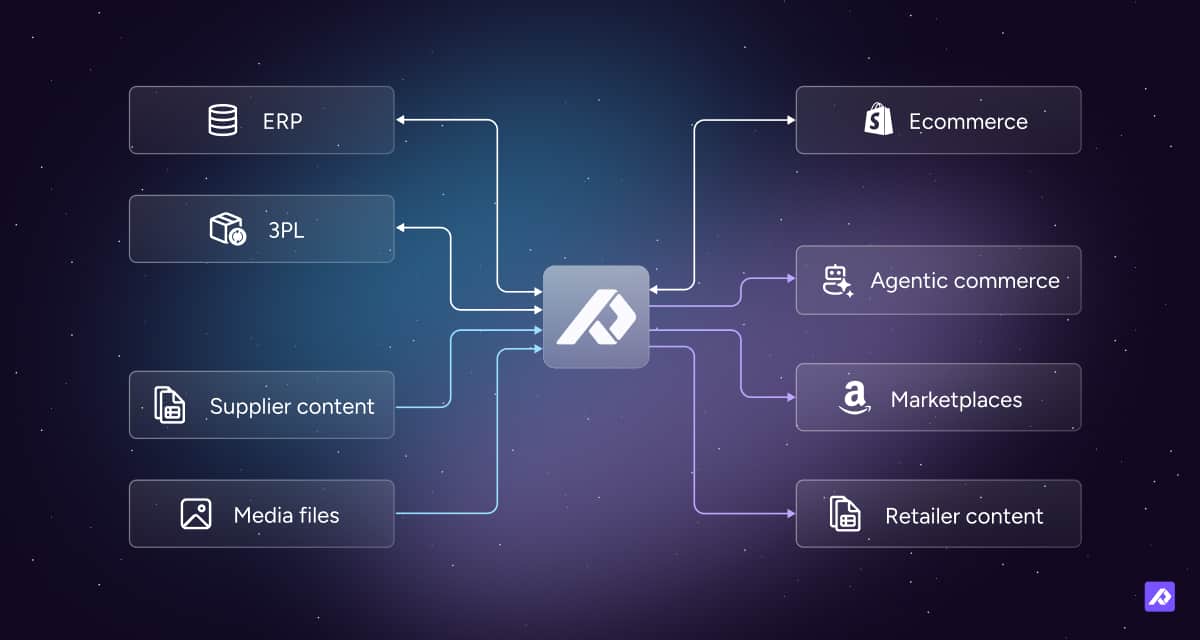
- Upstream systems (ERP, suppliers, spreadsheets) send product data into Plytix.
- Plytix is where teams organize, improve, and approve product content.
- Downstream channels (Shopify, marketplaces, retail partners, and sales materials) receive the right version of that content.
That means you can rely less on:
- Spreadsheets as your “system”: Less copying, fewer broken versions, less VLOOKUP detective work.
- Disconnected asset folders: Images and documents stay attached to the products they belong to.
- Copy-paste publishing workflows: Less manual uploading and repeated formatting.
- Translation back-and-forth: Localization stays closer to the source content.
- IT-dependent updates: Business teams can make changes without a developer for every small edit.
So you spend less time maintaining tools and more time shipping updates.
Pricing: Free plan first, then scale with usage
Plytix pricing is designed so that companies of all sizes can get started without a big upfront commitment.
The Free plan covers most of what teams need to centralize product data and assets, and paid plans scale based on how much you publish, automate, and process. Monthly credits cover usage-heavy work like AI transformations and feed processing, and add-ons like Brand Portals and Product PDFs can be added when you need them.
Frequently Asked Questions
Plytix includes PIM, DAM, and Feed Management, plus AI Content Studio, in one platform built to manage and distribute product content across channels.
Yes. Plytix supports products with variants like sizes and colors, and product relationships like bundles, kits, and product families.
Yes. Teams can manage localized product content and maintain consistent structure while adapting copy and requirements by market.
Most teams bring data in through imports or scheduled feeds and distribute content through channels and exports, with API-based options when needed.
No. Shopify runs your storefront. Your ERP runs back-office operations like stock and orders. Plytix manages the product content that helps shoppers decide to buy.
Instead of storing a different version of everything, teams typically keep one clean source and use mapping and transformations so each channel gets the format it expects.
A product list (even a CSV) and at least one place you want to publish product content. Most teams start with one channel, then expand.
Often, yes, especially when multiple teams and channels are involved. As content moves between tools and people, it can lose accuracy, tone, and completeness.